Mold Remediation
IICRC, IRI, InterNACHI & Mold Inspection Institute certified mold remediation — available 24/7 across Maryland with a fast emergency response.
Certified mold remediation including containment, HEPA filtration, safe removal, antimicrobial treatment, and prevention strategies to protect your property.
Emergency help — request a callback
Mold Remediation at a glance
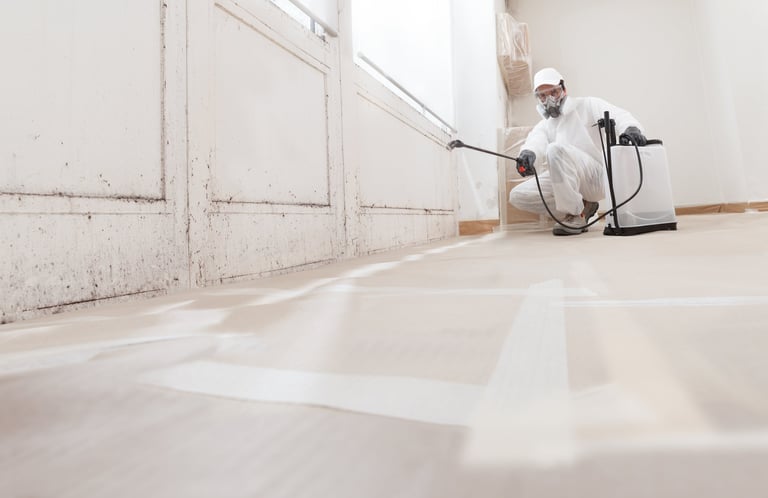
Mold only needs moisture, and left alone it keeps spreading through drywall and framing. Pure Resto removes it following the IICRC S520 standard and EPA guidance: the affected area is contained, contaminated materials are removed or cleaned, HEPA filtration and antimicrobial treatment run throughout, and the structure is dried so the mold doesn't return. Remediation is finished with clearance testing — a written result, not a promise.
- How fast does mold grow?
- On wet drywall, carpet backing or other porous materials, mold can begin within 24–48 hours of water exposure.
- Do I need testing first?
- Not always. Testing matters when growth is hidden or suspected — behind walls, in ductwork, after a long-term leak — or when you need before-and-after evidence for a claim.
- Do I have to move out while you work?
- Usually not. A single contained room can be sealed and worked in while you stay; if the HVAC system or a large area is involved, we explain what access changes before we start.
- Is it covered by insurance?
- Mold from a covered event such as a burst pipe is often covered, but many policies cap remediation — frequently at $10,000 or less. Gradual leaks and humidity are usually excluded.
Why Mold Remediation Matters
Professional Mold Remediation Across Maryland
Certified mold remediation including containment, HEPA filtration, safe removal, antimicrobial treatment, and prevention strategies to protect your property. Left untreated, the damage doesn't stop — water wicks into framing, mold spreads silently, and soot corrodes surfaces. That's why every Pure Resto job starts fast: typically within about 30 minutes of your call, most of the time.
Our IICRC, IRI, InterNACHI & Mold Inspection Institute certified technicians follow the published industry standards for every project, work directly with all major insurance carriers using Xactimate estimating, and back the work with a written satisfaction guarantee.
30-Min Response
Licensed & Insured
IICRC · IRI · InterNACHI
Satisfaction Guaranteed
What Is Mold Remediation?
Mold Remediation is the professional, certified process of certified mold remediation including containment, hepa filtration, safe removal, antimicrobial treatment, and prevention strategies to protect your property. It is performed to the standards of the IICRC, the Institute of Restoration & Inspection (IRI), and the Mold Inspection Institute.
Why Choose Pure Resto
What You Get with Every Job
IICRC S520 containment and HEPA air filtration
Removes contaminated material safely without spreading spores
Antimicrobial treatment and clearance testing included
Fixes the moisture source so mold won't return
What We Respond To
What We Remove, and How We Contain It
Drywall, wood, ceilings, basements — each material and location decides whether growth can be cleaned in place or has to come out. Here's how we handle each one, and how the work stays contained.
Mold removal from drywall
Drywall is the material mold takes over fastest — the paper facing on both sides feeds it, and it spreads across the sheet long before it goes through. Where growth is surface-only on a small patch, it can be cleaned and treated; where it has penetrated the board or the insulation behind it, the affected material comes out and the cavity is cleaned. Removing only the visibly spotted part is what leaves growth behind the repair.
Mold removal from wood and wood framing
Lumber behaves differently from drywall: it's structural, so the goal is to keep it. Solid framing that is stained but not rotted can be HEPA-vacuumed and treated in place; wood that has softened, delaminated or gone crumbly has to be replaced. We dry the framing to its dry standard first, because treating wood that's still wet just gives the growth a fresh start.
Mold removal from ceilings
Ceiling growth almost always traces back to something above — a roof leak, an upstairs bathroom or a supply line — and the water usually spreads along the joists beyond the visible patch. We remove the affected ceiling material, clean and dry the joists behind it, and fix the moisture source before the ceiling goes back. Replacing the ceiling over an unfixed source is the most common repeat job we see.
Basement, attic, crawl space and bathroom mold removal
Where the growth is changes the job. Basement mold removal starts with the wall base and slab; attic mold remediation depends on fixing ventilation so the sheathing stops condensing; crawl space mold remediation means dealing with the ground vapour and the floor system above it; bathroom mold removal is usually a ventilation problem behind the tile and grout. Each of those is a different scope, and one generic treatment won't cover all four.
Black mold removal and black mold remediation
Black mold removal follows the same process as any other remediation — containment, removal, cleaning, drying — but the stakes are higher because Stachybotrys only grows on material that has been wet for days. That means the moisture source is always part of the job, and we confirm the species by sampling rather than by colour. Black mold remediation that only removes the pigment and not the water is temporary.
Mold containment procedures and mold spore containment
Every remediation is built on mold containment procedures: barriers around the work area and negative air pressure so spores travel in, not out. Air filtration during mold remediation runs HEPA units continuously, and HEPA vacuum mold cleanup removes spores from surfaces and cavities without dispersing them. Mold spore containment is what separates a professional job from a person with a spray bottle and a mask.
Mold affected material removal and mold contamination removal
Mold contamination removal is a decision-making job as much as a physical one. Mold affected material removal follows the standard: porous materials that have been wet and growing for a while come out; hard surfaces that can be cleaned and dried stay. We document what we removed and why, which is what an adjuster needs and what protects you if the same room is inspected again later.
Post-remediation cleaning and moisture control
Post-remediation cleaning removes the dust and residual spores that settled during the work — the step that makes a room genuinely clean instead of just growth-free. After that it's moisture control and mold prevention: we verify the structure is dry, identify what caused the moisture, and tell you what to change. Structural drying and mold prevention belong together, because a remediation without drying just resets the clock.
Mold Remediation Services for Maryland Homes and Businesses
Pure Resto is a mold remediation company working across Maryland, and we take both sides of the job seriously: removing the growth, and fixing what fed it. Our mold remediation services cover residential mold remediation and commercial mold remediation, from one bathroom to a whole building, and every job is run by mold remediation specialists working to the IICRC S520 standard.
That means complete mold remediation, not a spray-over: mold containment procedures and mold spore containment go up first, air filtration during mold remediation and HEPA vacuum mold cleanup run throughout, then mold affected material removal, mold contamination removal and post-remediation cleaning. Moisture control and mold prevention close the job, which is why structural drying and mold prevention are treated as one step rather than two.
If you need mold removal services or mold cleanup services, professional mold removal, indoor mold removal or black mold removal, it lands in the same process. Some people call it mold damage cleanup or property mold restoration; we call it getting the building back to normal and keeping it there. Maryland mold remediation requests come in most often after a leak, a flood, or a slow drip that ran long enough to spread behind a wall.
- Mold remediation services and professional mold remediation
- Residential and commercial mold remediation
- Black mold remediation and black mold removal
- Mold cleanup services and mold treatment services
- Professional mold removal and complete mold remediation
- Mold damage restoration and property mold restoration
- Indoor mold removal and mold contamination cleanup
- Basement, attic, crawl space and bathroom mold removal
- Mold removal from drywall, wood and ceilings
- Mold removal after water damage and mold contamination removal
- Mold containment procedures and mold spore containment
- HEPA vacuum mold cleanup and air filtration during remediation
- Moisture control and mold prevention with structural drying
- Post-remediation cleaning and clearance verification
How Our Mold Remediation Process Works
A proven, step-by-step approach that minimizes damage and gets your property back to normal fast.
Containment
We set up barriers and negative air pressure so spores can't spread.
Removal
Contaminated materials are removed and HEPA-vacuumed, not scrubbed.
Antimicrobial Treatment
Surfaces are treated and the area is dried to prevent regrowth.
Clearance Testing
We verify dryness and confirm the removal was complete.
FAQ
Mold Remediation Questions, Answered
Can I just clean up mold myself?
Will mold come back after remediation?
How long does mold remediation take?
Mold Remediation Near You
We provide mold remediation across Maryland and Washington, DC from our base in Bowie, MD 20715. Pick your community for local details on neighborhoods, housing and the water and fire problems we see most there — or call and we'll confirm coverage for your ZIP.
The Mold Remediation Process, Step by Step
Containment, HEPA filtration, removal, clearance and source control — plus a DIY vs. professional comparison.
Other Restoration Services
Many properties need more than one type of restoration. Explore our related services.